How to Improve Online Presence for Business Growth
Discover how to improve online presence with step-by-step actions for businesses. Learn to optimize and verify your digital footprint for greater growth and visibility.
Start reading
Did you know that over 80 percent of consumers research a brand online before making a purchase? Your digital presence shapes first impressions and drives customer decisions. Understanding how to assess and evolve your online strategy can mean the difference between steady growth and missed opportunities. By taking a focused approach to optimizing your digital assets, strategy, user experience, marketing, and ongoing performance, you can stay ahead in a rapidly changing online world.
Table of Contents
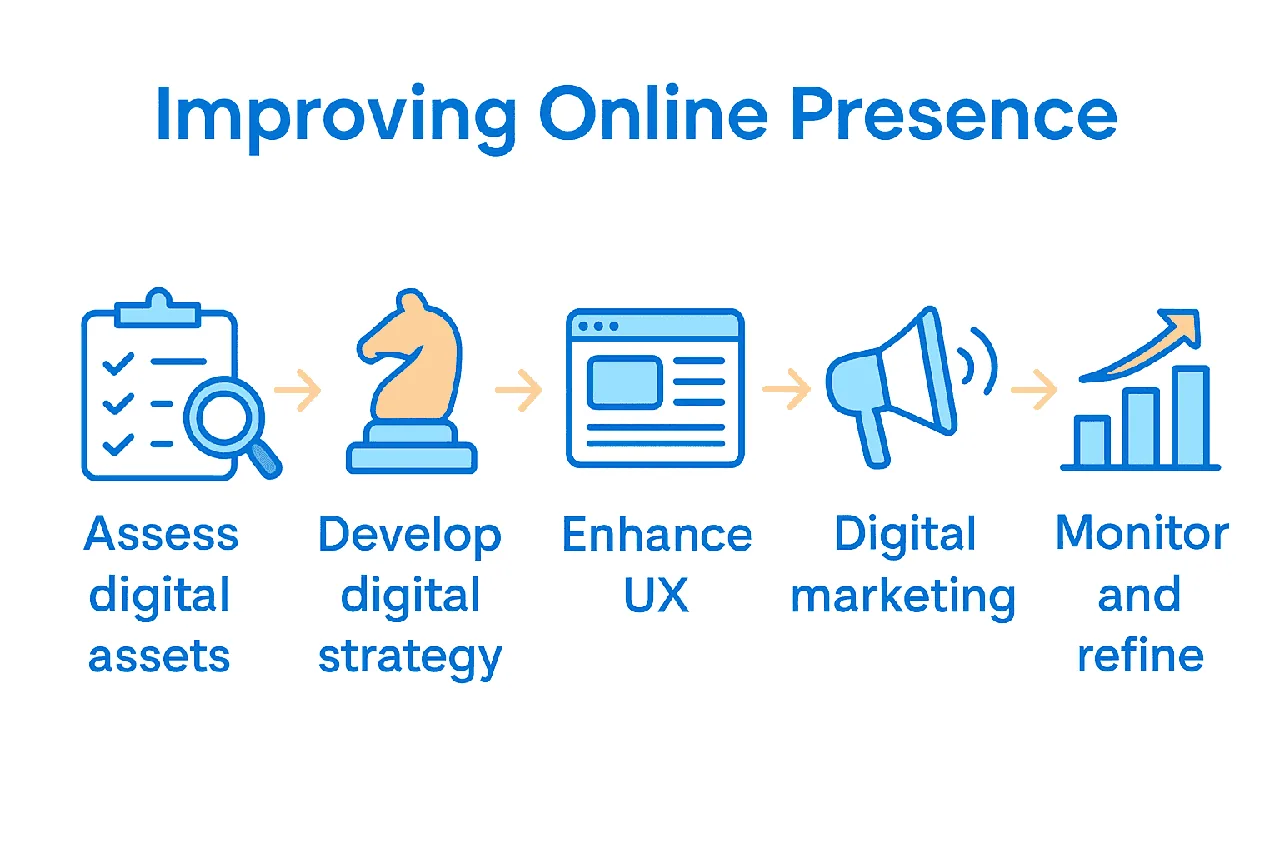
- Step 1: Assess Current Digital Assets And Brand Positioning
- Step 2: Develop A Comprehensive Digital Strategy
- Step 3: Enhance Website And Mobile User Experience
- Step 4: Amplify Reach With Targeted Digital Marketing
- Step 5: Monitor, Measure, And Refine Online Performance
Quick Summary
| Key Point | Explanation |
|---|---|
| 1. Conduct a Comprehensive Audit | Catalog and evaluate all digital assets to identify strengths and weaknesses. This sets the foundation for future improvements. |
| 2. Define Strategic Objectives Clearly | Establish clear business goals and corresponding digital capabilities for a focused and effective digital strategy. |
| 3. Enhance User Experience Across Platforms | Improve website and mobile functionality by ensuring ease of navigation, fast loading times, and responsive design to retain visitors. |
| 4. Develop a Multi-channel Marketing Strategy | Combine different digital channels with tailored content to engage target audiences more effectively and maximize outreach. |
| 5. Continuously Monitor Performance Metrics | Set up analytics to track key performance indicators, allowing for ongoing improvements and adaptability to market shifts. |
Step 1: Assess Current Digital Assets and Brand Positioning
Assessing your current digital assets and brand positioning is the strategic first step towards building a robust online presence that drives business growth. According to Jisc, future-proofing your digital strategy requires anticipating technological and societal changes while maintaining competitive relevance.
To begin this assessment, conduct a comprehensive audit of your existing digital channels. Start by cataloguing all online platforms where your brand currently exists such as websites, social media profiles, digital marketing materials, and online customer touchpoints. Evaluate each asset critically by examining factors like visual consistency, messaging alignment, user experience, and performance metrics. EAB Research emphasizes that effective digital strategies are characterized by bold future-oriented goals that connect directly with your organization’s core mission.
Key areas to scrutinise during this audit include:
- Website design and functionality
- Social media profile completeness and engagement rates
- Search engine visibility and ranking
- Content quality and relevance
- Brand voice consistency across platforms
Pro tip: Document your findings in a structured spreadsheet that allows you to track strengths, weaknesses, and potential improvement opportunities. This systematic approach transforms your assessment from a passive review into an actionable roadmap for digital transformation.

Once you have completed this detailed assessment, you will be ready to develop a strategic plan that addresses gaps and leverages your existing digital strengths.
Step 2: Develop a Comprehensive Digital Strategy
Developing a comprehensive digital strategy transforms your online approach from scattered efforts to a unified, goal-oriented plan. According to MIT CISR, a great digital strategy focuses on clear competitive strengths and is directional rather than targeting a rigid end state.
Start by defining your strategic objectives and mapping out specific digital capabilities that will help you achieve them. This involves carefully analyzing your business goals, target audience needs, and technological opportunities. IMD emphasizes taking an enterprise-wide approach that designs customer-centric strategies delivering lasting value. Break down your strategy into actionable components such as technology infrastructure, digital marketing channels, customer engagement platforms, and data analytics systems.
Key elements to include in your digital strategy:
- Clear business objectives
- Target audience analysis
- Technology and infrastructure requirements
- Digital marketing and communication channels
- Performance measurement metrics
- Budget allocation and resource planning
Pro tip: Remain flexible and adaptable. Your digital strategy should be a living document that evolves with technological advancements and market changes.
Regularly review and update your approach to stay competitive.
With a robust digital strategy in place, you are now prepared to move forward with targeted implementation and execution of your digital transformation plan.
Step 3: Enhance Website and Mobile User Experience
Enhancing your website and mobile user experience is crucial for capturing and retaining online audience attention. According to Jisc, future-proofing digital strategies involves adapting to technological advancements to improve user experiences across different devices.
Begin by conducting a comprehensive usability audit of your digital platforms. This means critically examining your website and mobile interfaces from a user perspective, focusing on navigation ease, visual design, loading speed, and overall functionality. Prioritize creating a seamless and intuitive experience that allows users to find information quickly and engage with your content effortlessly. Consider implementing responsive design techniques that automatically adjust your website layout for optimal viewing across smartphones, tablets, and desktop computers.
Key areas to focus on for improved user experience include:
- Mobile responsiveness and adaptive design
- Intuitive navigation and menu structures
- Fast loading times across all devices
- Clear and compelling visual hierarchy
- Accessible design for users with different abilities
- Streamlined user journey and conversion paths
Pro tip: Use analytics tools to track user behavior and identify potential friction points in your digital experience. Regular testing and iterative improvements based on real user data can significantly enhance your website performance and user satisfaction.
By implementing these user experience enhancements, you will create a more engaging and professional online presence that effectively communicates your brand value and converts visitor interest into tangible business opportunities.
Step 4: Amplify Reach with Targeted Digital Marketing
Targeted digital marketing is the strategic approach to connecting with your ideal audience precisely where they are most engaged online. Learn more about practical digital marketing strategies that can transform your business outreach.
To amplify your digital marketing reach, develop a multi-channel strategy that combines various digital platforms and communication methods. This means creating tailored content for different social media channels, search engine marketing, email campaigns, and paid advertising that speaks directly to your specific customer segments. Focus on understanding your target audience deeply identifying their online behaviors, preferences, and pain points that your products or services can solve.
Key components of an effective digital marketing strategy include:
- Detailed audience persona development
- Multichannel content distribution
- Targeted social media advertising
- Search engine optimization (SEO)
- Performance tracking and analytics
- Consistent brand messaging across platforms
Pro tip: Invest time in creating high-quality, value-driven content that genuinely helps your target audience. Authentic and informative content builds trust and positions your brand as an industry leader more effectively than aggressive sales tactics.
By implementing a thoughtful and strategic digital marketing approach, you will create meaningful connections with potential customers and drive sustainable business growth through targeted online engagement.
Step 5: Monitor, Measure, and Refine Online Performance
Continuous performance monitoring is essential for maintaining a competitive online presence. According to IMD, developing a digital transformation roadmap requires creating practical strategies that involve ongoing monitoring and refinement to ensure alignment with organizational goals.
Implement a comprehensive analytics framework that tracks key performance indicators across your digital platforms. Discover the top metrics to measure your digital marketing success and establish a systematic approach to collecting and analyzing data. This means setting up tools like Google Analytics, social media insights, and customer engagement tracking systems that provide real-time insights into your online performance. Jisc emphasizes the importance of continuous evaluation and adaptation to technological changes to maintain relevance and competitiveness.
Key metrics to track and analyze include:
- Website traffic and user engagement
- Conversion rates
- Social media reach and interaction
- Customer acquisition costs
- Search engine rankings
- Content performance
Pro tip: Create a monthly dashboard that consolidates your most critical performance metrics. This allows you to quickly identify trends, spot potential issues, and make data-driven decisions that continuously improve your online strategy.
By consistently monitoring, measuring, and refining your online performance, you will create a dynamic digital presence that adapts to changing market conditions and drives sustainable business growth.
Elevate Your Online Presence and Drive Business Growth Today
Struggling to translate your digital assets into real growth is a challenge many South African businesses face. Your brand deserves a strong online presence that delivers clear messaging, seamless user experience, and targeted digital marketing that connects with your audience deeply. The article highlights the need to assess and enhance your website and digital strategy to stay competitive and adaptable. If you want to fix website issues like poor responsiveness or inconsistent branding and unlock new growth opportunities, expert help is just a click away.
At Cloud Fusion, we specialise in bespoke, scalable web solutions that align perfectly with your business objectives and brand voice. Discover our tailored Web Design and Development services that focus on enhanced user experience and strategic digital growth. Don’t let outdated digital assets hold you back. Start transforming your online presence now by visiting Cloud Fusion’s comprehensive digital solutions. Expert guidance and innovative technology await to take your business forward.
Frequently Asked Questions
How can I assess my current online presence for business growth?
To assess your current online presence, conduct a comprehensive audit of your digital assets, including your website, social media profiles, and any online marketing materials. Catalog each asset and evaluate factors like design, messaging, and user engagement to identify strengths and weaknesses.
What steps should I follow to develop an effective digital strategy for my business?
Start by defining clear business objectives and analyze your target audience to develop a customer-centric digital strategy. Break down your strategy into actionable components, including technology requirements, digital marketing channels, and performance metrics to ensure alignment with your goals.
How can I improve the user experience on my website for better engagement?
Enhance your website’s user experience by conducting a usability audit that focuses on navigation, design, and loading speeds. Implement responsive design features to ensure your site performs smoothly across all devices, making it easier for visitors to find and engage with your content.
What digital marketing strategies should I use to amplify my online reach?
Utilize a multi-channel digital marketing approach that includes tailored content for social media, SEO, and email campaigns. Create detailed audience personas to guide your content distribution and advertising efforts, ensuring you connect with your ideal customers effectively.
How often should I monitor and measure my online performance?
Regularly monitor your online performance by tracking key metrics like website traffic, conversion rates, and social media engagement. Aim to create a monthly performance dashboard to quickly identify trends and areas for improvement, allowing you to refine your strategy based on data-driven insights.